
9 October 2026
Read the articleUTM Tracking Best Practices: Five Rules, Named Owners
Treat UTM tracking as an owned process, not an ad hoc task: set naming rules, assign owners, validate links, and follow a 30 to 90 day rollout checklist.
Insights
What we've learned building content, operations and revenue systems for health, wellness and performance brands.
Newsletter
Treat UTM tracking as an owned process, not an ad hoc task: set naming rules, assign owners, validate links, and follow a 30 to 90 day rollout checklist.
Learn how GA4 attribution across touchpoints assigns credit, where reports can mislead, and how to verify results before changing your marketing budget.

Use dashboards for fast action and reports for audited decisions. Checklist, scenarios, and a 90‑minute Plexo audit to map what belongs in monitoring...
For marketing leaders: decide agency vs in-house marketing with 25–35% fully loaded cost clarity, a 90‑minute audit, and a 90‑day plan.
Seven ready ActiveCampaign automation recipes for marketers, plus modular architecture and Jump To measurement tips. Includes a Plexo 90 minute audit to...
Practical referral program templates and a 6-week pilot plan for Australian wellness brands, with tracking and legal/privacy checklist, staff scripts, and...
A pragmatic CEO playbook to build a one page executive scorecard: keep 8 to 12 KPIs, map causal links, name owners, and set a review cadence that drives...

Adopt Amazon style weekly business reviews that turn core metrics into named actions. Includes a 90 minute audit to make the rhythm stick.

Operations-first offline conversion tracking: capture identifiers, map them in CRM, import on schedule, and meet Australian privacy rules.

Turn your integrated marketing strategy into a firm wide operating system. Start with a 90 minute audit, a 90 day plan, and shared KPIs for messaging,...

Turn your lead scoring model into revenue with a governance first playbook, checklists, a 90 day plan, and AI privacy checks.

Service packaging strategy for wellness founders: legally compliant subscriptions, Stripe billing alignment, plus a Plexo 90 day plan.

Clinic owners: create SOPs that cut no shows, protect consent under ACMA and APP 7, and stop revenue leaks with templates and a 90 minute audit.

Operations playbook for marketing teams to lock brand messaging in 90 days. Encode pillars into workflows and AI with concise templates and a short...

Copy a KPI tree with wiring sheet rows for dashboards. Two ready templates (revenue and non revenue), formulas, named owners, and a governance checklist.

For practitioners: prioritized process documentation practices, an SOP template, and a five question Plexo audit to find and fix gaps fast.

SMB owners: map data first to stop duplicate bookings. Includes integration options, webhook rules, and a 90 minute audit offer.

Evidence backed 90 day clinic playbook to cut missed appointments with one tap reminders, targeted calls, automated waitlists, equity checks.

Calculate CAC the investor way: blended, paid and fully loaded formulas, a P&L reconciliation checklist, and practical steps to reduce CAC this quarter.

Practical ops playbook for marketers: build, automate, and measure 3–5 behavioural segments in 90 days, with a Plexo case study and trigger examples.

Prioritize measurement and post training corrections to cut forecast error. Practitioner 90 day plan with four fixes and a Plexo case study.

Ops-first playbook for marketing leaders to ship a working first party data strategy in 90 days, with a copyable naming template and a 60–90 day checklist.
Copy marketing ready templates, connect Ads, Analytics and spreadsheets, then follow an eight step build checklist to launch a working Looker Studio...

Start with three email automations — confirmation, pre-arrival reminder, and post-stay follow-up. Reduce support calls, lower no-shows, and capture...

Learn a decision first operating cadence with copy ready agendas, a 90 minute diagnostic, and a 90 day rollout that gets decisions done.

Engineering first playbook to build unified customer data. Stepwise unification, governance and activation, plus a 30–90 day pilot plan.

How customer journey mapping services turn insight into measurable revenue and operational fixes for wellness brands.

A practitioner-focused checklist to help marketing teams choose among three warehouse paths, run a short pilot, and reach a first dashboard in 2–4 weeks.

Founders: turn one core goal into weekly, measurable work with a compact 90 day plan. Phase templates, weekly checkpoints, and an optional 90 minute audit.

Run cohort retention analysis: use M3 and SQL to spot churn drivers, then turn findings into a 90 day plan that reduces churn for wellness brands.

A practical, SLA driven client onboarding workflow that delivers a first result in 14 days, with copyable intake fields, checklist templates, and an ops...

Phased CRM implementation for leaders: link RACI and change control to day-to-day adoption, pick two KPIs, run a pilot, and know when to hire a managed...

Decide on HubSpot with a 90 day plan. Map Service Hub features to workflows, uncover onboarding and AI credit costs, and run a 90 minute audit first.

A five step, cadence driven CRM data hygiene plan that stops 22–34% annual contact decay, restores forecast accuracy, and includes a prioritised 90-day...

Sales and RevOps: turn pipeline coverage into an actionable forecast. Use 1 ÷ win rate, spot stale deals, and fix vanity metrics.

A first-time sauna guest, a lapsed member and a twice-a-week regular are not the same customer. Sending them the same message is the fastest way to train an audience to ignore you. Here is how to build segments that actually change what you send.

Meta One puts stronger profiles, organic links, audience tools and automated follow-up behind paid business plans. Here is what the announcement means for operators building attention into revenue.

Your customer journey did not get shorter. It got harder to see. People discover you on social, then land on a website that feels nothing like the feed that sold them. That gap is where trust resets, intent cools and revenue leaks.

Most founders assume the growth problem is a marketing problem. Run more ads. Post more content. Hire a freelancer. But the real issue is structural, and until you see it clearly, no campaign will fix it.

Wellness brands are producing more content than ever and seeing less return on it than ever. The problem isn't the quality of the content. It's the absence of a system underneath it.

Every wellness brand is spending to acquire customers. Almost none of them have a deliberate system for keeping them. This imbalance is costing far more than most founders realise.

Everyone is talking about AI visibility. Almost nobody is reading the actual data. Here is the three-step check we run for every brand we operate, using tools you already have access to and without paying for another dashboard.

You can post every single day and still generate zero business. Content is a tactic. Marketing is a system. Confusing the two is the most expensive mistake a growing brand can make.

Posting more is not a content strategy. The brands growing now are building an engine around shares, watch time, relevance and a weekly rhythm their team can actually run.

None of these require a bigger budget to fix. They require looking at the account the way an operator does: creative first, cash flow last, and no reporting fluff in between.

Every wellness founder eventually asks the same question: should we be spending on Meta or Google? The honest answer is that they are not competing channels. They do different jobs, and the order you fund them in depends on where your growth is actually constrained.

Andromeda is the AI engine Meta uses to decide which ads make the shortlist before anyone sees them. For wellness founders, the takeaway is simple: creative quality and volume now matter more than audience hacks.

Most brands do not have a content problem. They have a production problem. Here is the four-hour framework we use to build a six-month content bank in a single morning: ideation, capture, edit system, calendar.

Wellness brands pour 80% of budget into acquisition while customers quietly disappear after day 14. Rising CAC and flat LTV is not an acquisition problem. It is a retention seam. Here is the 4-step post-purchase system that turns one-off visits into twelve-month memberships.

Mild hyperbaric chambers are not clinical HBOT, and the fastest way to lose trust is to talk as if they are. Here is the evidence, the language that stays safe, and the content that actually fills sessions.
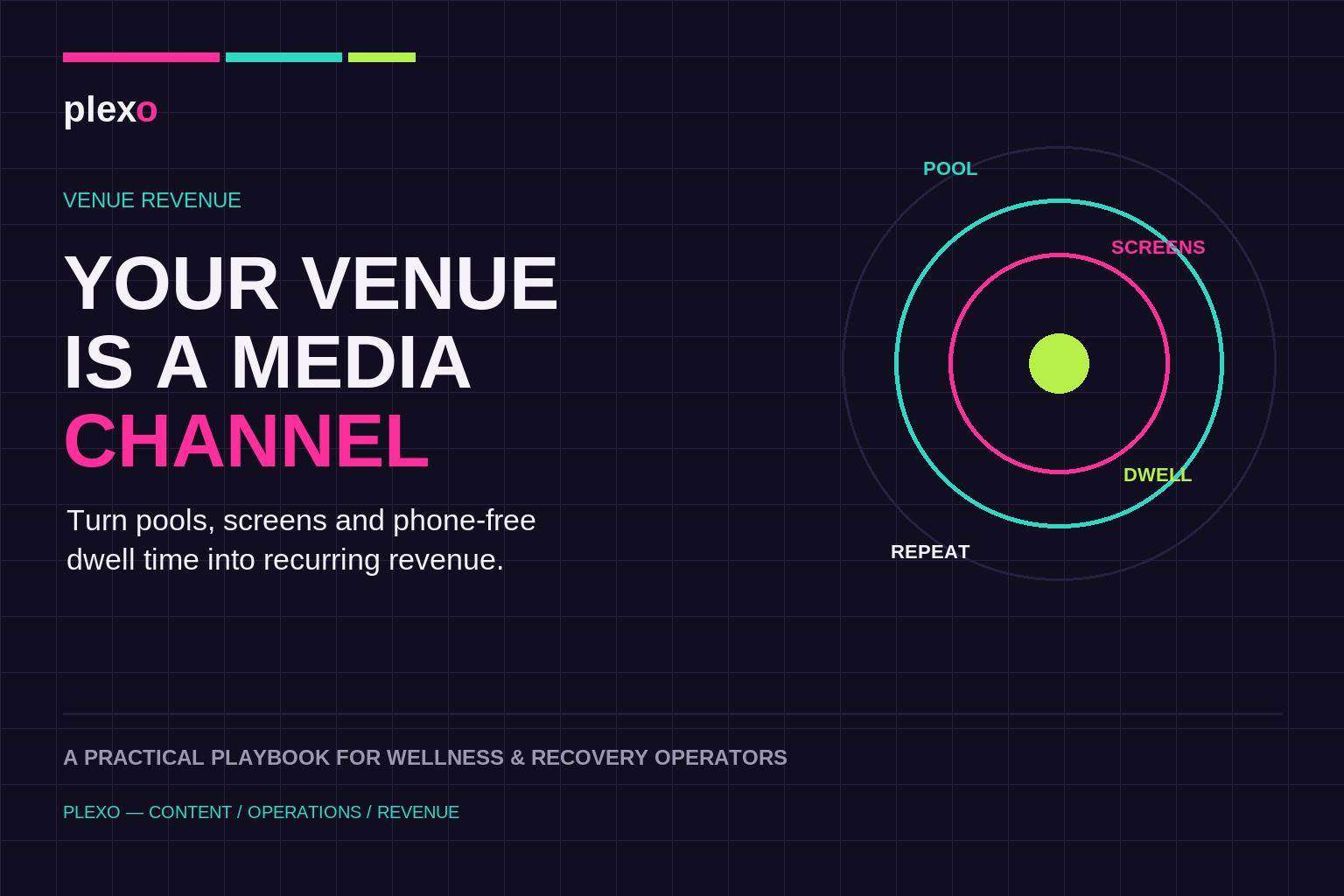
Pools, recovery circuits and phone-free sessions create something digital advertising struggles to buy: sustained attention. Here is how operators can package that attention for aligned brands without compromising member trust.
Newsletter