One size fits nobody: why wellness brands have to segment before they communicate.
A first-time sauna guest, a lapsed member and a twice-a-week regular are not the same customer. Sending them the same message is the fastest way to train an audience to ignore you. Here is how to build segments that actually change what you send.
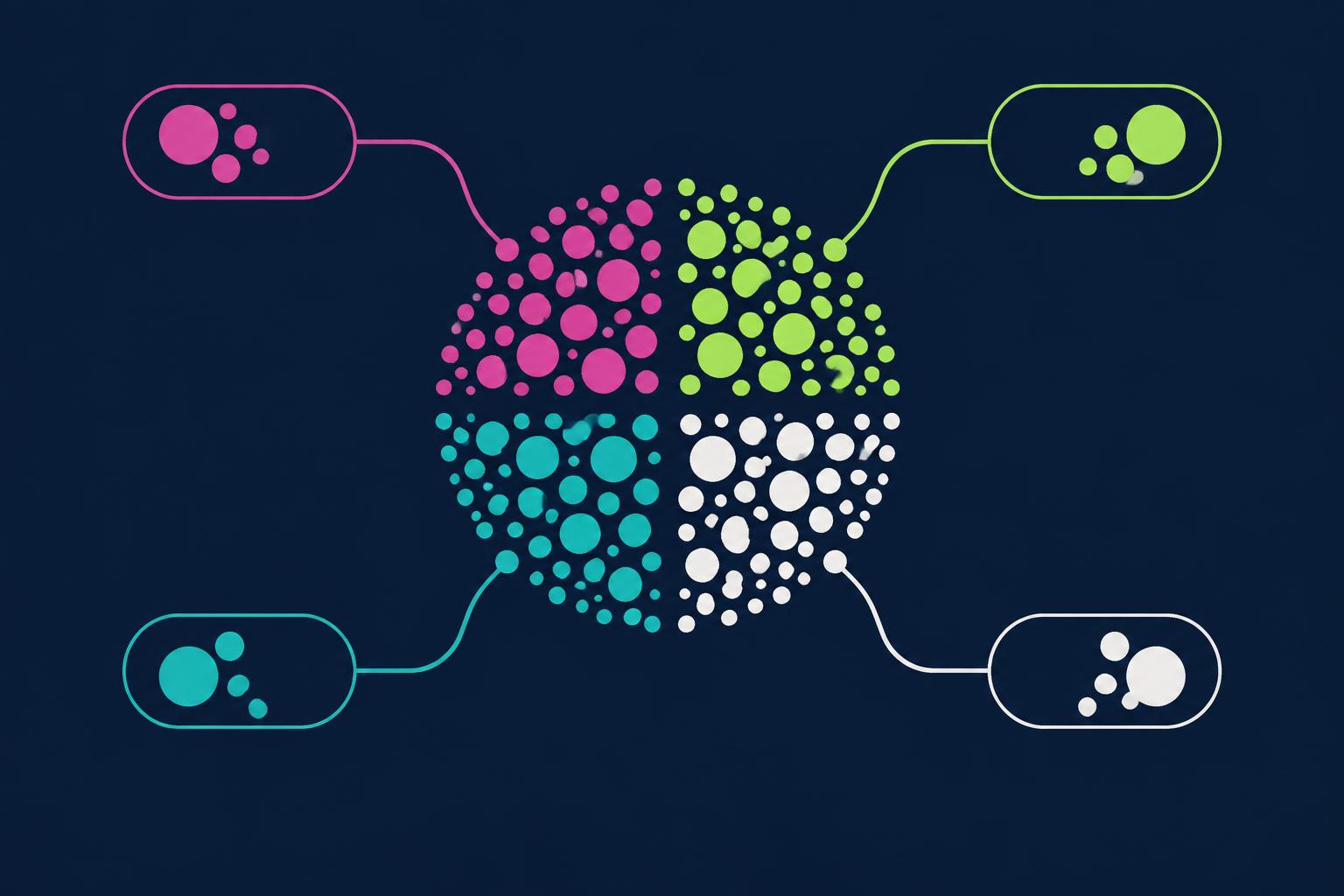
Most wellness brands run one list. Everyone gets the same newsletter, the same promotion and the same reminder, regardless of whether they booked yesterday or last winter. It feels efficient. It is the single biggest reason email and SMS performance flattens out as a brand grows.
Your audience is not one audience. It is a set of very different relationships that happen to share an inbox.
Why one message to everyone quietly costs you money.
When a message is written for everyone, it has to stay general. General messages get skimmed, then ignored, then unsubscribed. Mailchimp's analysis of segmented versus non-segmented campaigns across almost nine million recipients found segmented campaigns produced roughly 14% higher opens, over twice the clicks, and around 9% fewer unsubscribes.
The damage is not only the unsubscribe. It is the slow decline in engagement that follows, which drags deliverability down for the people who would have bought. You are not just failing to sell to the wrong segment, you are reducing your ability to reach the right one.
- 14%
- higher open rates on segmented campaigns in Mailchimp's benchmark study
- 2x
- click rate versus the same senders' non-segmented campaigns
- 71%
- of consumers expect personalised interactions, per McKinsey's personalisation research
The four segments almost every wellness brand needs.
Start simple. Four lifecycle segments cover the majority of the revenue opportunity in a studio, clinic, recovery space or supplement brand. You can add sophistication later, but almost nobody has exhausted the value of these four.
- 01
Prospects who have not bought
They follow you, they joined the list, they have never booked or purchased. They need proof, reassurance about the first experience, and a low-friction entry offer, not a loyalty message.
- 02
First-time customers
They have been in once. The single highest-leverage window in the whole business. They need onboarding: what to expect, how often to come, what results look like and when to return.
- 03
Active regulars and members
They already believe. Discounting to this group destroys margin. They need progress, protocol depth, priority access, referrals and reasons to increase frequency or upgrade.
- 04
Lapsed customers
They stopped. The right message acknowledges the gap and removes whatever blocked the return, whether that is price, scheduling, habit or an experience that did not land.
Segment by behaviour, not by demographics.
Age and gender predict far less about wellness buying behaviour than recency, frequency and the service someone chose. Two 34-year-old women, one booking contrast therapy weekly and one who bought a single IV drip nine months ago, need completely different messages. Demographic segments feel tidy and change nothing about what you send.
Segments that change nothing
- Age bracket
- Gender
- Suburb, used on its own
- How someone signed up two years ago
- Broad interest tags nobody maintains
Segments that change the message
- Days since last visit or purchase
- Number of sessions in the last 90 days
- Service or product category chosen
- Membership status and plan tier
- Whether onboarding was completed
What each segment should actually receive.
A segment only exists if it receives something different. If four segments get the same campaign with a different first name, you have personalisation theatre, not segmentation.
- 01
Prospects
Education plus social proof plus a first-visit offer. One clear next step, repeated across a short sequence rather than buried in a monthly newsletter.
- 02
First-timers
A 30-day onboarding arc: what to expect, how to prepare, ideal frequency, early results, then a membership or pack offer anchored in what they have already done.
- 03
Regulars
Protocol content, new services, priority booking, referral asks and upgrades. Never the same discount you send to win back a lapsed customer.
- 04
Lapsed
A short win-back with a reason to return now, and a question that surfaces why they left. The answers are worth more than the immediate bookings.
If you cannot say what a segment should receive that no other segment receives, it is not a segment. It is a filter.
The data you need before you can segment.
Segmentation fails in wellness businesses far more often on data plumbing than on strategy. Bookings sit in one system, payments in another, the email list in a third, and nobody can answer how many people visited once and never returned. The fix is unglamorous: one customer record, with last visit date, lifetime sessions, service category, membership status and consent, synced to the platform that sends the messages.
Before you write a single campaign, make sure you can answer one question on demand: how many customers visited once in the last 90 days and have not returned? If you cannot, that is the project, not the copy.
How to build this in one working week.
- 01
Day one, define the segments
Write the four definitions in plain rules: lapsed is no visit in 90 days, regular is three or more visits in 90 days, and so on. Agree them once, in writing.
- 02
Day two, connect the data
Get booking and purchase history into the email and SMS platform, even if the first version is a scheduled export. Accuracy beats elegance.
- 03
Days three and four, write the sequences
One onboarding sequence, one win-back sequence, one regulars cadence. Four to six messages each, not a library nobody will finish.
- 04
Day five, turn it on and set the review
Launch the automations, keep the broadcast newsletter for the whole list, and diarise a 30-day review of the metrics below.
How to measure whether it worked.
Open rates are the weakest signal available, particularly since Apple Mail Privacy Protection inflates them. Judge segmentation on behaviour: repeat purchase rate of first-time customers, 90-day return rate, revenue per recipient, win-back conversion and unsubscribe rate by segment. If revenue per recipient rises while unsubscribes fall, the segmentation is doing its job.
Review by cohort rather than by campaign. A single send tells you very little; the month-on-month movement in how many first-time customers become regulars tells you whether the communication is actually changing behaviour.
Sources.
- Mailchimp: Effects of list segmentation on email marketing stats
- Mailchimp: Using segmentation to improve click rate and increase sales
- Mailchimp: Email marketing benchmarks and industry statistics
- McKinsey & Company: The value of getting personalisation right, or wrong, is multiplying
Published 17 September 2026. Benchmark figures are the publishers' own reported averages and will differ from your results; use them as direction, not as targets.
Free diagnostic tool
The Wellness Brand Growth Audit
Score your growth architecture across six systems and see exactly where revenue is leaking. Enter your details and the PDF is yours.
- 6 growth systems scored in under 10 minutes
- 24 diagnostic questions with what good looks like
- A results page you can bring to a discovery call
Newsletter
Work with Plexo
Find out how much revenue is already in your customer base.
A 30-minute discovery call is often enough to identify the specific retention gaps costing your brand the most. No pitch, no obligation, just a direct conversation about your growth architecture.
Book a discovery callKeep reading